
Since launching in 2020, Free Your Feels (FYF) has grown into a statewide, youth-centered mental health initiative that combines broad reach with meaningful connection. Across five years of work, the campaign has consistently shown that when mental health conversations are accessible, non‑judgmental, and grounded in youth voice, everyone benefits.


*FYF content drove 600,000+ digital touchpoints, reflecting how often people saw and actively engaged with posts through likes, shares, comments, and clicks.
*A “unique” visitor means a distinct individual user, counted only once during a specific time period, no matter how many times they visit the site.
SEE THE WORK BEHIND THE IMPACT


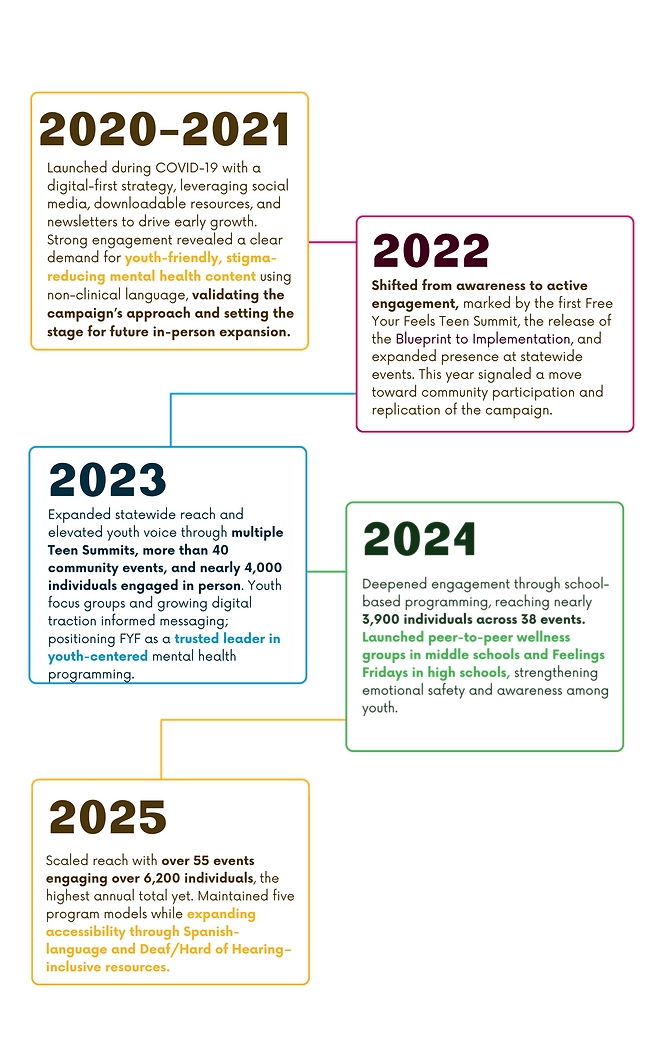
Over the past five years, Free Your Feels has grown from a digital campaign into a statewide community presence — showing up in schools, events, and online spaces to make youth mental health conversations easier to start and safer to have.
As a youth-focused campaign promoting mental health awareness and education, FYF begins with universal prevention (Tier 1), adapts to community context, and has evolved into more targeted prevention (Tier 2) through peer-to-peer programming and technical support — offered largely at no cost to schools and communities.


These experiences prioritize connection, dialogue, and shared learning, creating spaces where young people feel safe to explore emotions, build skills, and strengthen relationships with peers and trusted adults:


Free Your Feels Teen Summits bring together youth, caregivers, and community partners for interactive, youth-centered mental health experiences. While each summit is shaped locally, common elements include youth peer leaders, adult allies, caregiver café, creative activities for self-expression, and connections to community resources.

Teen Summit Highlights:
While all Free Your Feels Teen Summits center youth mental health, some are intentionally designed with a dual focus based on local community needs. In Athens and Northwest Georgia, Teen Summits also highlighted opioid misuse prevention, recognizing the connection between mental health, substance use, and community well‑being. This approach supports braided funding and promotes long‑term sustainability.
Explore previous summits in our Teen Summit Playlist on YouTube!
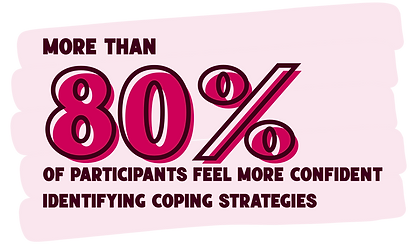
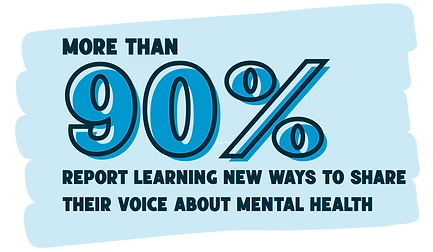
FYF Teen Summit participants report...


Teen Summits are especially effective at normalizing conversation and building confidence. Youth consistently report feeling accepted, heard, and more willing to talk about mental health. These outcomes are key to prevention and early help‑seeking.


Digital platforms allow Free Your Feels to reach youth and adults in a way that’s accessible and relevant to their everyday lives.
* Click on the social media icon to be connected to FYF platforms

A multi-platform digital strategy ensures that mental health resources are available privately, repeatedly, and on demand, supporting both prevention and continued learning.


Recognizing that mental health resources are often inaccessible to youth who are Deaf and Hard of Hearing, Free Your Feels intentionally partnered with organizations and consultants serving these communities to close gaps in access and representation.


Free Your Feels also collaborates with organizations
that work directly with youth in school and
community settings to bring programming to LIFE.


Resilient Teens partners with Free Your Feels and Hope Givers to support youth mental health education and resilience‑building through school and community‑based programming.
Kate’s Club has collaborated with Free Your Feels to help young people impacted by grief access age-appropriate mental health resources and supportive spaces for connection and healing.
Go Soar ( Also known as She Soars) partners with Free Your Feels to support mental wellness through school‑ and community‑based programming for young people.
Free Your Feels is excited to keep learning, growing, and sharing resources with communities across Georgia! Whether you’ve been part of this work since the beginning or joined us along the way, thank you for helping make the last five years meaningful — and for being part of a community committed to showing up for young people.

Get support implementing FYF in your community — including training and technical assistance (TTA), help creating Quiet Rooms or Wellness Corners, capacity‑building trainings, and more!
RESOURCES

Implement and share the online Blueprint 2.0 for tools, implementation guidance, and ready‑to‑use resources

Download and share FYF digital resources with updates monthly
SOCIALS
Follow us on your favorite platforms


